Wedding Dress Silhouettes: A Guide to the Differences Between A-Line, Mermaid, Ball Gown and Sheath
When you first start searching for different wedding dress styles, you will probably come across names such as A-Line, Mermaid, Ball Gown, and Sheath. However, the difference between these names is not limited to the appearance of the dress; each one refers to the overall shape of the gown and the way it sits on the body.
A silhouette is essentially the overall shape of a wedding dress and can affect its volume, movement, and the overall character of the bridal look. For this reason, understanding different silhouettes is one of the first steps toward narrowing down your options when exploring wedding dresses.
An important point is that a silhouette should not be confused with the neckline, fabric, or embellishments of a dress. For example, two dresses may both have an A-Line silhouette, while one is made of satin and the other of lace, or one may be completely minimal while the other is decorated with beading and appliqué.
What Is a Wedding Dress Silhouette?
A silhouette is the overall shape and visual outline of a dress when viewed from a distance. In other words, before looking at details such as lace, beading, neckline, or embellishments, the silhouette is the shape you see first.
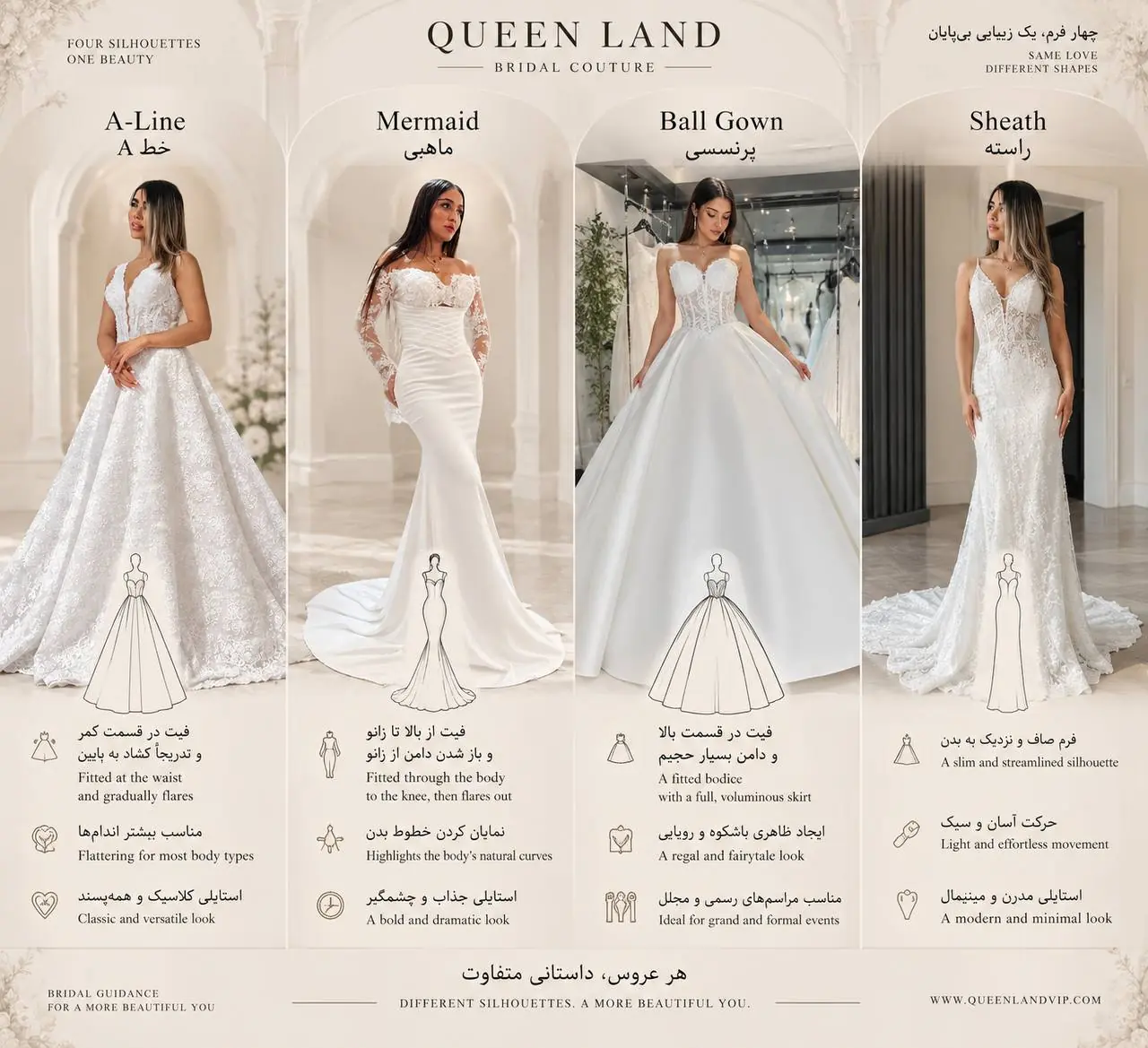
For example, if the skirt gradually widens from the waist and creates a shape similar to the letter A, the dress has an A-Line silhouette. If the dress remains fitted through the body and then begins to flare noticeably around the lower part of the skirt, it creates a Mermaid shape. A Ball Gown, on the other hand, is defined by a highly voluminous skirt and a more structured bodice, creating a more dramatic appearance.
Therefore, when choosing a wedding dress, it is better to begin with the question:
“What overall shape do I want from my dress?”
Then move on to the choice of fabric, neckline, sleeves, and details.
1. What Is an A-Line Wedding Dress?
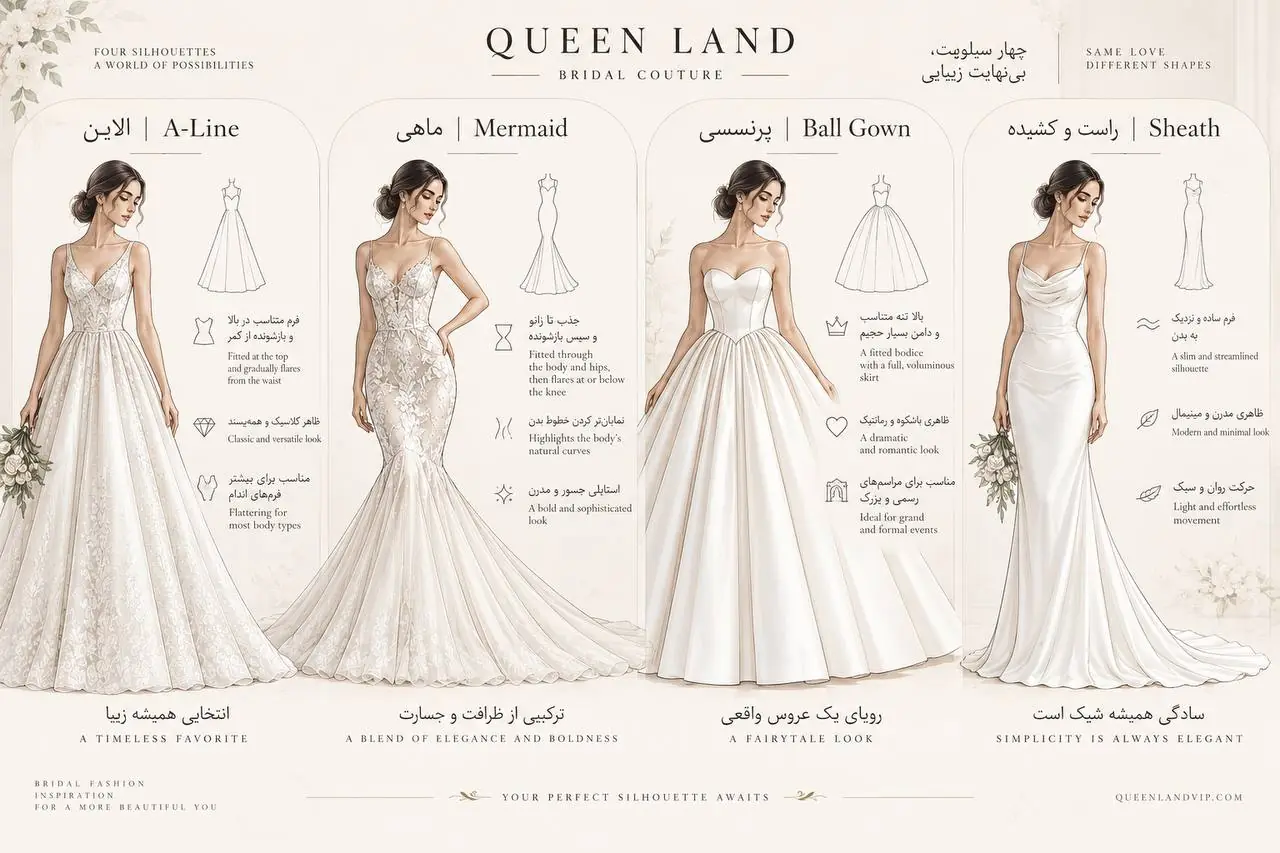
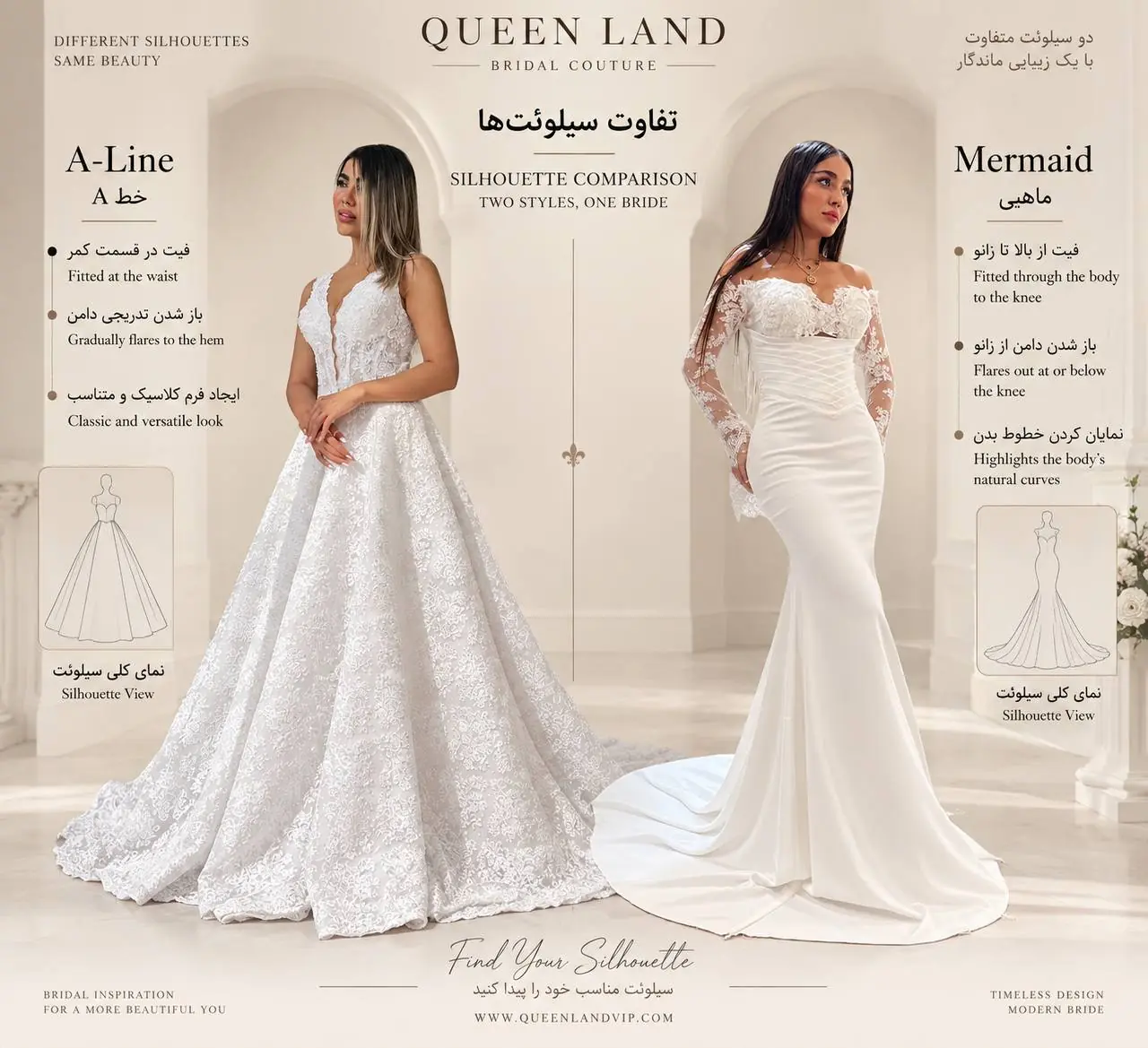
A-Line is one of the most recognizable wedding dress silhouettes. In this style, the bodice is generally fitted or shaped close to the body, while the skirt gradually widens from the waist downward, creating an overall shape similar to the letter A.
The defining characteristic of an A-Line is that the skirt flares gradually, unlike a Ball Gown, which usually creates much more volume from the upper part of the skirt.
What Does an A-Line Silhouette Look Like?
This silhouette can have either a classic or a completely modern appearance depending on the fabric and details used. For example:
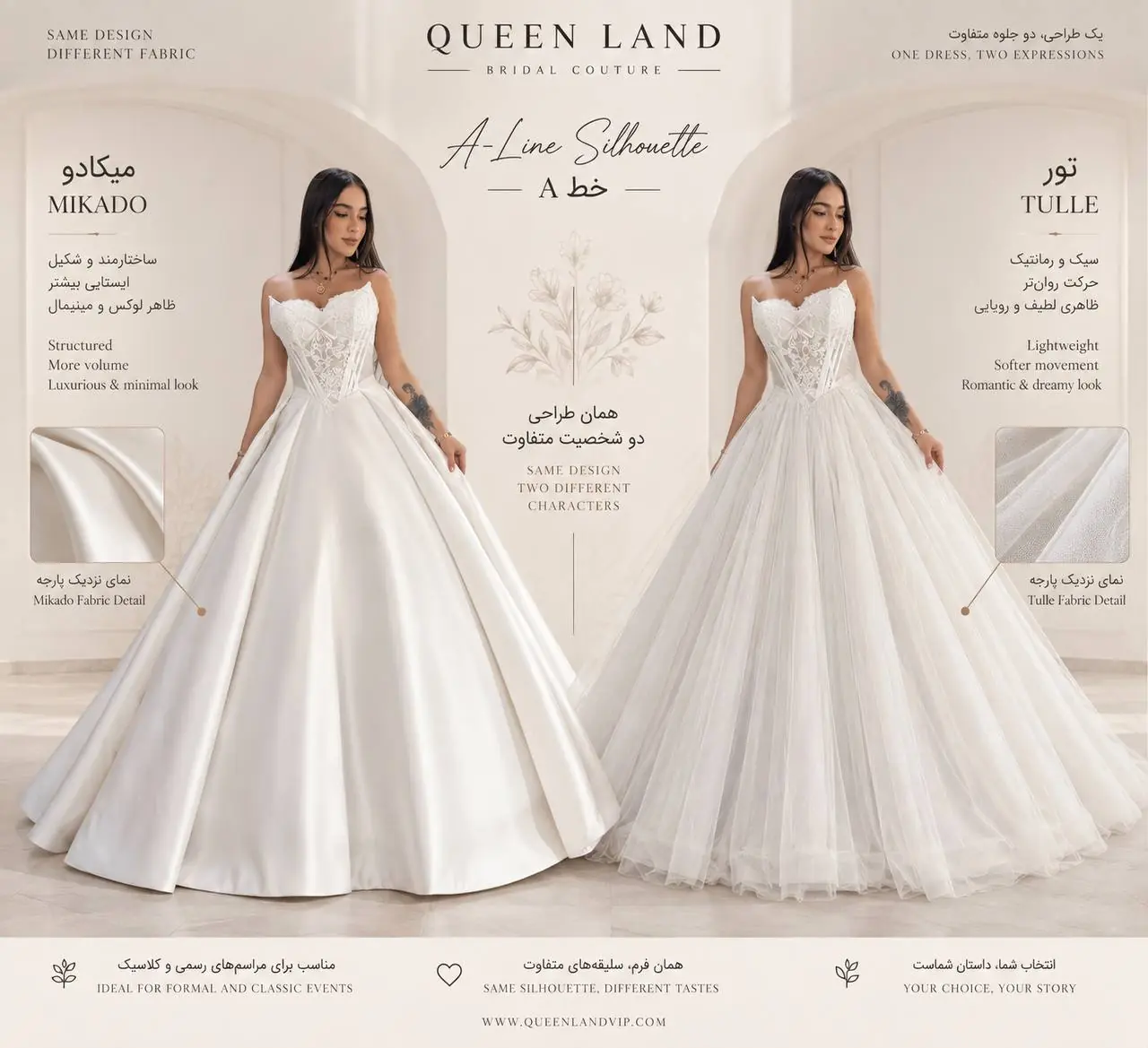
An A-Line dress made of Mikado can look structured and formal.
An A-Line dress made of tulle can feel lighter and more romantic.
A lace A-Line dress can create a more classic and delicate appearance.
A minimal A-Line dress with limited embellishment can be suitable for brides who prefer a clean aesthetic.
For this reason, A-Line is not limited to one particular style; it is a versatile foundational silhouette that can be transformed in many ways.
What Is the Difference Between A-Line and Ball Gown?
The main difference is the amount of volume in the skirt.
An A-Line skirt gradually widens and usually has a more controlled volume, while a Ball Gown generally has a much fuller skirt and creates a stronger contrast between the bodice and the lower part of the dress.
2. What Is a Mermaid Wedding Dress?
The Mermaid silhouette is fitted through the bodice, waist, and usually the hips, then begins to flare noticeably lower on the skirt, often around the knee area.
This distinct transition between the fitted upper section and the flared lower section is one of the most recognizable characteristics of a Mermaid silhouette.
In this style, the natural lines of the body play an important role in the design. Unlike an A-Line dress, the skirt does not gradually flare from the waist.
What Kind of Look Does a Mermaid Silhouette Create?
This silhouette generally creates a look that feels:
Structured
Fitted
Formal
Luxurious
Statement-making
However, the amount of emphasis placed on the body depends on factors such as the fabric, stretch, corset structure, point where the skirt begins to flare, and bodice design.
Mermaid Is Not the Same as Trumpet
These two silhouettes are sometimes confused.
In a Mermaid dress, the skirt generally remains fitted for longer and flares more noticeably at a lower point. In a Trumpet silhouette, the skirt may begin to widen earlier and more gradually.
Therefore, when choosing a dress, do not rely solely on the product name. Pay attention to where the skirt actually begins to flare.
3. What Is a Ball Gown Wedding Dress?
If your idea of a wedding dress is a dramatic, voluminous skirt paired with a relatively fitted bodice, you are probably imagining a Ball Gown silhouette.
In this style, the bodice is usually structured, while the skirt begins to expand significantly from the waist or upper skirt area. This volume can be created through multiple layers of tulle, petticoats, lining, or internal construction.
What Is the Difference Between a Ball Gown and an A-Line?
Both silhouettes can have a flared skirt, but:
A-Line:
Gradual flare + more controlled volume
Ball Gown:
More dramatic flare + greater volume + stronger contrast between the bodice and skirt
Therefore, if an A-Line dress is made extremely voluminous, it can visually approach a Ball Gown. This is why the boundary between these two silhouettes is not always defined by one fixed line; the actual construction and volume of the skirt are what matter.
What Kind of Wedding Is a Ball Gown Suitable For?
This silhouette often works particularly well with weddings that have a more formal or grand atmosphere, especially when the bride wants a classic and dramatic look.
However, this does not mean a Ball Gown is limited to only one type of wedding. The final choice should be based on the venue, atmosphere, comfort, and personal style of the bride.
4. What Is a Sheath Wedding Dress?
Compared with A-Line and Ball Gown, the Sheath silhouette has a simpler, more streamlined shape that follows the body more closely.
This style generally creates a relatively straight and elongated line without adding significant volume to the skirt, making it particularly suitable for minimalist, modern, and clean bridal aesthetics.
One of the appealing characteristics of Sheath is that the dress does not have to be completely simple. A Sheath gown can:
Be made of satin;
Feature lace;
Include beading;
Have appliqué;
Include a sleeve design;
Feature a train;
Or even be paired with a long veil.
Therefore, Sheath does not mean “a simple dress”; it describes the overall silhouette of the gown.
Comparing the Four Main Silhouettes
Silhouette | Overall Shape | Skirt Volume | Defining Characteristic |
A-Line | Gradually flared | Medium | Gradual opening from the waist |
Mermaid | Fitted through the body, then flared | Low to moderate through the upper skirt, greater toward the hem | Emphasizes the body’s natural lines |
Ball Gown | Fitted bodice with a highly voluminous skirt | High | Dramatic and princess-like appearance |
Sheath | Elongated and close to the body | Low | Simple, streamlined and modern appearance |
This comparison is only a starting point because fabric, internal structure, corsetry, skirt layers, and design details can significantly change the final appearance of a silhouette. Even two dresses with the same silhouette can look and feel very different because of differences in fabric and construction.
Should You Choose Your Wedding Dress Silhouette Based on Body Shape?
This is one of the most common questions, but it is better not to reduce dress selection to a fixed rule such as “this body shape can only wear A-Line.”
Body shape can certainly play a role in choosing a dress, but personal preference, comfort, desired aesthetic, the type of ceremony, and the actual design of the dress are also important.
Even contemporary bridal styling guidance discourages limiting each body shape to only one or two silhouettes. Instead of relying on rigid rules, it is more useful to consider how the actual dress is constructed and how it sits on the individual body.
For example, a bride may have a particular body shape but strongly prefer a Mermaid gown. In this case, the final result can be adjusted through the appropriate choice of fabric, corsetry, point where the skirt begins to flare, neckline, and dress details.
So the better question is:
“How is this silhouette designed and constructed on my body?”
rather than:
“Does my body shape allow me to wear this style?”
How Does Fabric Affect the Silhouette?
One of the most important points that should not be overlooked when choosing a wedding dress is the relationship between the silhouette and the fabric.
An A-Line silhouette made from Mikado, for example, can have a very defined and structured shape, while the same silhouette made from tulle or a softer fabric can have a completely different movement and volume.
Mikado and other structured fabrics can be suitable for creating defined and voluminous shapes, while softer fabrics can create more fluid movement. Lace can also be used across a variety of silhouettes, functioning as a decorative or structural surface element depending on the design.
Therefore, it is better to approach the selection process in this order:
Silhouette → Fabric → Internal Structure → Details
How Do You Choose the Right Silhouette for Yourself?
Before making your final decision, ask yourself these questions:
1. How Much Volume Do I Want?
If you want a skirt that is relatively full but still controlled, an A-Line may be worth considering.
If you want a dramatic and highly voluminous appearance, explore the Ball Gown silhouette.
If you prefer a closer fit to the body, Sheath or Mermaid may be among the silhouettes worth trying.
2. How Much Do I Want My Body Shape to Show?
Mermaid and some Sheath designs emphasize the body’s natural lines more strongly, while A-Line and Ball Gown silhouettes allow for greater volume through the skirt.
3. What Is the Atmosphere of My Wedding?
A large formal celebration and a small civil ceremony or outdoor event do not necessarily call for the same type of dress.
4. How Comfortable Do I Feel in the Dress?
Standing in front of a mirror is not enough. During your fitting, try the dress in real movements:
Walk.
Sit down.
Take a few faster steps.
Move your arms.
Try it with the shoes you plan to wear for the ceremony.
A beautiful dress is truly a good choice when it also works with the practical conditions of your wedding.
Queen Land: Choosing the Silhouette Before the Details
In bridal design, selecting the silhouette is an important starting point, but it is not the end of the design process.
At Queen Land, a base shape such as A-Line, Mermaid, Ball Gown, or Sheath can be transformed into a completely different aesthetic through the choice of fabric, neckline, sleeves, train, corsetry, and embellishments.
For this reason, when exploring Queen Land designs, do not focus only on the name or photograph of the gown. Pay attention to its construction, how it sits on the body, and the details of its execution as well.
An Important Point Before Making Your Final Choice
Sometimes a bride falls in love with a dress in a photograph but discovers during the fitting that the silhouette is not exactly what she imagined. This is completely normal because a photograph captures only one moment of the dress and cannot fully communicate its movement, weight, internal structure, and the way it sits on the body.
That is why, during a fitting, it is better not to ask only:
“Is this dress beautiful?”
Instead, ask:
“Is this shape, volume, movement, and overall character what I want for my wedding?”
Frequently Asked Questions
What Is the Difference Between A-Line and Ball Gown?
Both can have flared skirts, but an A-Line usually has a gradual flare and more controlled volume, while a Ball Gown creates a much fuller and more dramatic skirt.
What Is the Difference Between Mermaid and Sheath?
Both can follow the body closely, but a Mermaid silhouette generally flares noticeably toward the lower part of the skirt, while Sheath has a straighter and more streamlined shape.
Is A-Line Suitable for Every Body Shape?
No silhouette should be restricted to one specific body shape. The design of the dress, fabric, proportions, and personal preference also play an important role.
Is a Mermaid Dress Only Suitable for Slim Brides?
No. This is not a fixed rule. A Mermaid dress should be chosen based on its actual construction, the design of the gown, the bride’s proportions, and her comfort.
Does a Sheath Dress Have to Be Simple?
No. Sheath is a silhouette, not a measure of embellishment. It can be completely minimal or feature lace, beading, appliqué, and even a train.
Which Silhouette Is Best for a Princess-Style Wedding Dress?
Ball Gown is generally the silhouette most closely associated with the classic princess-style wedding dress because of its highly voluminous skirt. However, an A-Line can also create a similar feeling through additional volume and layered construction.
Conclusion
Understanding silhouettes helps you approach wedding dress shopping with greater clarity and purpose.
A-Line features a gradually widening skirt and offers a classic and versatile shape.
Mermaid emphasizes the body’s natural lines and creates a distinct flare toward the lower part of the skirt.
Ball Gown creates a dramatic and princess-like appearance through its voluminous skirt.
Sheath offers an elongated, streamlined silhouette with less volume and is often associated with modern and minimalist aesthetics.
However, there is no single “best” silhouette. The right choice comes from considering the dress shape, fabric, construction, level of embellishment, type of ceremony, and the bride’s personal style together